What happens in the brain during nondual meditation?

In nondual meditation, the mist can clear to reveal a previously hidden path. Credit: Neil Williamson/Flickr

Research has shown that focused attention (FA) meditation can combat stress, and that open monitoring (OM) can help with emotion regulation. A more advanced technique, known as “nondual” or “open awareness”, begins to dissolve the illusory distinctions between oneself and the rest of the world, and can even provide meditators with flashes of creative or spiritual insight.

Nondual awareness is a state of mind that helps people to think outside their boxes – the “boxes” being our established mental models of how the world works and our place in it.

We build these mental models through learning over the course of a lifetime. They are invaluable, but over time they can become increasingly rigid and unfit for purpose. Rather than helping, they perpetuate old habits and preclude fresh insights.

Continue reading “What happens in the brain during nondual meditation?”

What happens in your brain as you become more aware of how the mind works?

Three networks interact to determine the focus of our attention – the executive, salience and default mode. Credit: AI

It’s perfectly normal to experience emotions such as anger, frustration and anxiety as you sit in front of your computer fielding work messages. The trouble starts when these feelings spiral out of control, causing chronic stress and harming your mental and physical wellbeing.

Meditations that involve open monitoring or “OM” (such as the guided meditation below) teach us to notice when negative thoughts and feelings arise – then simply let them go. We learn to become more aware of these mental events without getting involved with them.

Continue reading “What happens in your brain as you become more aware of how the mind works?”

What happens in your brain and body during focused attention meditation?

FA meditation activates a branch of the nervous system that restores calm after a threat has passed. Credit: AI

In focused-attention (FA) meditation, the meditator directs their attention towards a neutral bodily sensation, and gently returns it to that sensation whenever they notice that their mind has wandered. In Shamatha meditation, for example, the focus of attention is the sensations associated with breathing in and out.

Focusing our attention in this way helps to replace the fight-or-flight response with the relaxation response. This kind of meditation activates the “parasympathetic nervous system”, which is the branch of the autonomic (or “involuntary”) nervous system that restores calm after an immediate threat has passed. The parasympathetic nervous system slows our breathing and heart rate, for example, and promotes digestion.

Continue reading “What happens in your brain and body during focused attention meditation?”

What happens in your brain as you check your emails?

boxing-fight-or-flight
Email can trigger physiological responses that evolved to help us see off aggressive rivals. Credit: West Point/Flickr

The “fight-or-flight” response evolved in our distant ancestors to prime their hearts, muscles and lungs for action, giving them that vital extra boost to escape ravenous predators or see off aggressive rivals. After the immediate threat had passed, a “relaxation” or “rest and digest” response kicked in to restore their overexcited bodies to a state of calm better suited for more restful activities, such as feeding and grooming.

But in modern humans, technologies such as social media and email can keep our fight-or-flight response constantly switched on by continually presenting us with stimuli that provoke feelings of excitement, fear or aggression.

Continue reading “What happens in your brain as you check your emails?”

Responsible Substance Use: There is No Magic Bullet

There is no quick fix for life, no magic chemical bullet for all our troubles. Photo credit: Ben Ahhi/Flickr

This post first appeared on Third Wave

Amid all the excitement and positivity as we crest the Third Wave of psychedelic medicines, a moment of quiet self-reflection may be in order. In the first of a new three-part series about the responsible use of these powerful tools for self-transformation, we discuss potential pitfalls for the unwary from using various medicines, from ketamine and kambo to the classic psychedelics.

Continue reading “Responsible Substance Use: There is No Magic Bullet”

Can acid dissolve the social isolation of autism and Asperger’s syndrome?

eyes
An inability to intuit other people’s thoughts, emotions and intentions in their eyes is a hallmark of autism and Asperger’s. Photograph: Lior Mosko/Flickr

Aaron Paul Orsini felt utterly alone in the world: emotionally numb and devoid of any sense of connection with anybody, including himself. Sunk deep in depression since his teens, he spent much of his time alone in his bedroom, as he puts it, “trying to figure out how the game of being human worked … I kept going to therapy. I kept reading books. I kept working at my desk job. I kept trying new medications. I kept failing, time and time again, with the simple act of identifying the emotional needs of myself and others.”

He spoke to his therapist about his struggles to maintain contact with friends and make new ones, “and how even one-on-one moments felt very confusing at times. I was physically close to people such as my girlfriend, but still very much emotionally distant, from her, myself, and really, everyone in my life.”

At 23 he was at last given a diagnosis that made sense of his tortured efforts to connect socially: autism spectrum disorder. But while the revelation was intellectually interesting, he says, it left him in precisely the same bind: unable to make sense of his own emotions or others’, “feeling irretrievably broken” and increasingly having thoughts about ending it all. Continue reading “Can acid dissolve the social isolation of autism and Asperger’s syndrome?”

Meditation brightens mood by pumping up dopamine levels

snowman
Happy Christmas! Image: pixabay

In an age of instant gratification and limited attention spans, why would anyone take up meditation? Perhaps for its soothing, stress-busting effects? Focusing on their breath or a mantra, even beginners start to notice the calming influence of their body’s “relaxation response”, the physiological flipside of the adrenaline-fuelled fight-or-flight response. Among other things the relaxation response slows respiration and heart rate, eases muscle tension and lowers blood pressure, and the changes are associated with a quieting of the brain’s “default mode network”, responsible for mind-wandering, rumination and worry.

But can that really be the whole story?

A peaceful mind is a wonderful thing and for many this is the biggest incentive to meditate regularly – not least for those of us prone to anxiety and depression – but there is another, related benefit that has received scant scientific or medical attention: meditation can be pleasurable, even ecstatic. In the Buddhist meditation known as jhana, for example, the early stages are characterised not only by feelings of peacefulness, but also joy and happiness. Continue reading “Meditation brightens mood by pumping up dopamine levels”

The man on a lone mission to prove ayahuasca can treat bipolar disorder

Ayahuasca vine Banisteriopsis caapi
The ayahuasca vine Banisteriopsis caapi which contains an enzyme that prevents the breakdown of a wide range of psychoactive drugs. Credit: Jairo Gavlis Henao/Flickr

Expert opinion is heavily weighted against Benjamin Mudge. “If you asked your average psychedelic scientist, your average ayahuasca ceremony facilitator or expert in the field, or if you asked your average psychiatrist,” he says, “they would all say ayahuasca is dangerous for people with bipolar disorder because there’s a risk of manic depressive mood swings getting worse.”

And yet Mudge regularly drinks the South American psychedelic brew, claiming that it has stabilised his own bipolar disorder. Continue reading “The man on a lone mission to prove ayahuasca can treat bipolar disorder”

A puke bucket and an ancient medicine: is ayahuasca the future of PTSD therapy?

Combat posttraumatic stress disorder PTSD
Combat veterans with PTSD are beating a path to Peru in the hope that the plant medicine ayahuasca will help them process traumatic memories. Credit: Peter Murphy/Flickr

I’m sitting on a blue plastic, wipe-down mattress with my back to a wooden pillar. Within arm’s reach on the floor is a small torch to light my way to the toilet during the night, on the other side an orange plastic bucket to puke into. As the light fades my four companions, each with his or her own plastic mattress and bucket, disappear from view while on every side the barks, croaks, growls and cries of jungle life grow louder. Twenty minutes ago I gulped down a draught of the bitter psychedelic brew known as ayahuasca and I have convinced myself that I can feel its hot, unstoppable progress through my body, from my seething guts into my veins and onwards to my brain.

This is hardly a recreational drug experience, what with the nausea, vomiting and diarrhoea, not to mention the possibility of a truly terrifying trip, yet thousands now beat a path to Peru, Ecuador and Brazil every year to drink ayahuasca. Some are just looking for an exotic thrill, but others hope for enlightenment and healing from this ancient plant medicine. In the past few years, many of them have been war veterans desperate to escape the nightmares of post-traumatic stress disorder.

Read more at theguardian.com where this post was first published.

This is the happiness of the Buddha

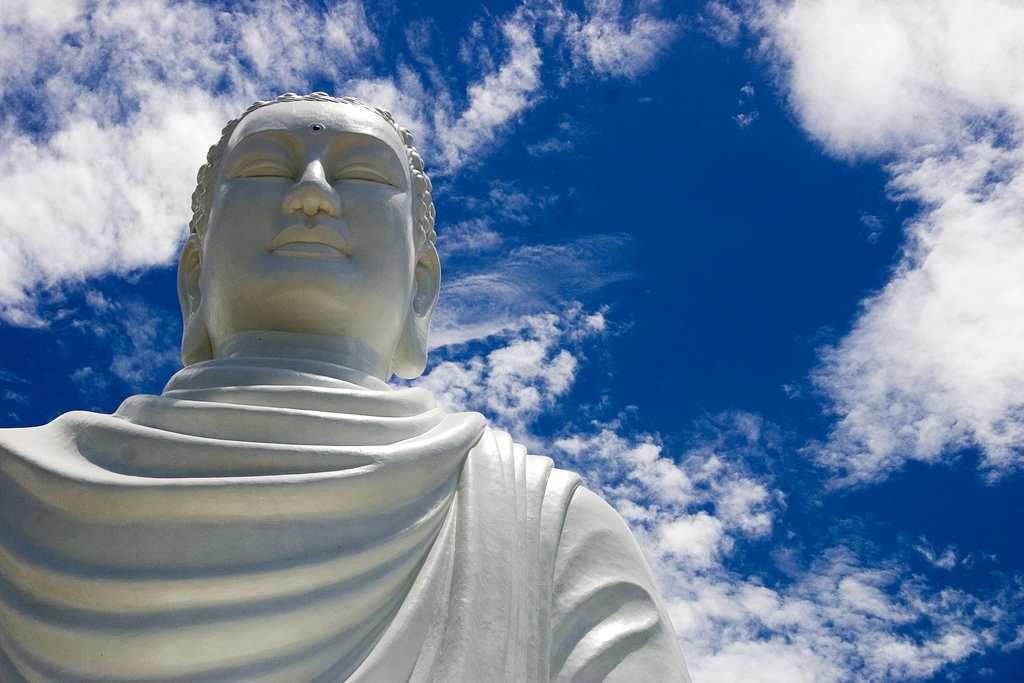
Buddha statue in Vietnam

Last weekend, a few months after the publication of Siddhartha’s Brain in Dutch, I gave a lecture about the science of mindfulness to a very polite, attentive audience at the wonderful Brainwash Festival in Amsterdam. Here’s a transcript.

Ladies and gentlemen, each and every one of us here will face two key problems in our lives. The first problem is that as creatures of biology, particularly when we’re young, we spend lots of time and energy pursuing the pleasures of sex, money, social status. And as biological creatures we also invest a lot of energy trying to avoid pain and unpleasantness.

For most people, this is what they mean when they talk about the pursuit of happiness. But pleasures never last and sooner or later, as we get older, we’re all going to experience the pain and unpleasantness of ill health and ageing. It’s just a fact of life.

So that’s our first problem, and I’m sure none of this is news to you.

The second problem is much more surprising and counterintuitive, but is just as important. The second problem is that we think way too much. Every second that we’re awake, our lives are dominated by what’s going through our minds. Continue reading “This is the happiness of the Buddha”