Please don’t let an AI zombie write your book for you

plastic zombies
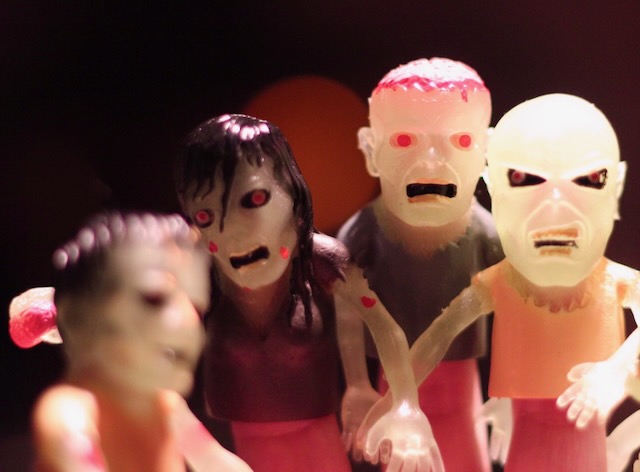
Artificial intelligence (AI) zombies: they’re coming for us all. Credit: cjggbella/Flickr

A few months ago I was offered the chance to edit a brilliant, original book in which the author made a powerful case that humans should not trust artificial intelligence. To pique my interest, there was a sample chapter that expertly explained the dangers of surrendering control to AI bots, which might give the illusion of understanding what they’re talking about but in reality know nothing

As an example of how seductive this illusion can be, the author cited the famous case of Clever Hans, a horse that could seemingly perform simple calculations, delivering the correct answer by tapping his hoof. Clever Hans drew crowds of amazed spectators, but unbeknownst to everyone – including his owner – the horse could sense subtle postural changes in the person asking the questions, which signaled when he should start tapping his hoof and when he should stop. 

In their sample chapter, the author wrote: “When asked, ‘What is two thirds plus one sixth?’ Hans would tap his hoof eight times, correctly signaling four-thirds.” 

I already had my suspicions that the author of this book was not a living human. In my work as an editor, I have learned to detect the telltale signs of manuscripts written by zombies: 

  • In terms of sentence structure, grammar, spelling etc., their text is flawless from start to finish (in other words, unlike any human I have ever met); 
  • They appear unusually well read and very smart; 
  • They provide no personal anecdotes; 
  • They have a tendency to repeat themselves;
  • Sometimes they are startlingly, inexplicably wrong.

Continue reading “Please don’t let an AI zombie write your book for you”

What happens in the brain during nondual meditation?

In nondual meditation, the mist can clear to reveal a previously hidden path. Credit: Neil Williamson/Flickr

Research has shown that focused attention (FA) meditation can combat stress, and that open monitoring (OM) can help with emotion regulation. A more advanced technique, known as “nondual” or “open awareness”, begins to dissolve the illusory distinctions between oneself and the rest of the world, and can even provide meditators with flashes of creative or spiritual insight.

Nondual awareness is a state of mind that helps people to think outside their boxes – the “boxes” being our established mental models of how the world works and our place in it.

We build these mental models through learning over the course of a lifetime. They are invaluable, but over time they can become increasingly rigid and unfit for purpose. Rather than helping, they perpetuate old habits and preclude fresh insights.

Continue reading “What happens in the brain during nondual meditation?”

What happens in your brain as you become more aware of how the mind works?

Three networks interact to determine the focus of our attention – the executive, salience and default mode. Credit: AI

It’s perfectly normal to experience emotions such as anger, frustration and anxiety as you sit in front of your computer fielding work messages. The trouble starts when these feelings spiral out of control, causing chronic stress and harming your mental and physical wellbeing.

Meditations that involve open monitoring or “OM” (such as the guided meditation below) teach us to notice when negative thoughts and feelings arise – then simply let them go. We learn to become more aware of these mental events without getting involved with them.

Continue reading “What happens in your brain as you become more aware of how the mind works?”

What happens in your brain and body during focused attention meditation?

FA meditation activates a branch of the nervous system that restores calm after a threat has passed. Credit: AI

In focused-attention (FA) meditation, the meditator directs their attention towards a neutral bodily sensation, and gently returns it to that sensation whenever they notice that their mind has wandered. In Shamatha meditation, for example, the focus of attention is the sensations associated with breathing in and out.

Focusing our attention in this way helps to replace the fight-or-flight response with the relaxation response. This kind of meditation activates the “parasympathetic nervous system”, which is the branch of the autonomic (or “involuntary”) nervous system that restores calm after an immediate threat has passed. The parasympathetic nervous system slows our breathing and heart rate, for example, and promotes digestion.

Continue reading “What happens in your brain and body during focused attention meditation?”

What happens in your brain as you check your emails?

boxing-fight-or-flight
Email can trigger physiological responses that evolved to help us see off aggressive rivals. Credit: West Point/Flickr

The “fight-or-flight” response evolved in our distant ancestors to prime their hearts, muscles and lungs for action, giving them that vital extra boost to escape ravenous predators or see off aggressive rivals. After the immediate threat had passed, a “relaxation” or “rest and digest” response kicked in to restore their overexcited bodies to a state of calm better suited for more restful activities, such as feeding and grooming.

But in modern humans, technologies such as social media and email can keep our fight-or-flight response constantly switched on by continually presenting us with stimuli that provoke feelings of excitement, fear or aggression.

Continue reading “What happens in your brain as you check your emails?”

Responsible Substance Use: There is No Magic Bullet

There is no quick fix for life, no magic chemical bullet for all our troubles. Photo credit: Ben Ahhi/Flickr

This post first appeared on Third Wave

Amid all the excitement and positivity as we crest the Third Wave of psychedelic medicines, a moment of quiet self-reflection may be in order. In the first of a new three-part series about the responsible use of these powerful tools for self-transformation, we discuss potential pitfalls for the unwary from using various medicines, from ketamine and kambo to the classic psychedelics.

Continue reading “Responsible Substance Use: There is No Magic Bullet”

Can acid dissolve the social isolation of autism and Asperger’s syndrome?

eyes
An inability to intuit other people’s thoughts, emotions and intentions in their eyes is a hallmark of autism and Asperger’s. Photograph: Lior Mosko/Flickr

Aaron Paul Orsini felt utterly alone in the world: emotionally numb and devoid of any sense of connection with anybody, including himself. Sunk deep in depression since his teens, he spent much of his time alone in his bedroom, as he puts it, “trying to figure out how the game of being human worked … I kept going to therapy. I kept reading books. I kept working at my desk job. I kept trying new medications. I kept failing, time and time again, with the simple act of identifying the emotional needs of myself and others.”

He spoke to his therapist about his struggles to maintain contact with friends and make new ones, “and how even one-on-one moments felt very confusing at times. I was physically close to people such as my girlfriend, but still very much emotionally distant, from her, myself, and really, everyone in my life.”

At 23 he was at last given a diagnosis that made sense of his tortured efforts to connect socially: autism spectrum disorder. But while the revelation was intellectually interesting, he says, it left him in precisely the same bind: unable to make sense of his own emotions or others’, “feeling irretrievably broken” and increasingly having thoughts about ending it all. Continue reading “Can acid dissolve the social isolation of autism and Asperger’s syndrome?”

Dreams, meditation and psychedelics: a manifesto for lucidity

alone bed bedroom blur
Photo by Pixabay on Pexels.com

“The life of one day is enough to rejoice. Even though you live for just one day, if you can be awakened, that one day is vastly superior to one endless life of sleep.”

Zen master Dogen

Awake or asleep, “Am I dreaming?” may be one of the most important questions you ever ask yourself because, sooner or later, reality has a way of catching up with delusions and fantasies. There’s going to be a rude awakening.

Dreams are so convincing while you are in the midst of one. For all you know you could be dreaming right now. How do you know this is actually happening, that you are wide awake reading these words on a solidly, physically existing electronic device? You could be fast asleep dreaming the whole thing.

It is not difficult, in principle, to determine whether or not you are dreaming. There are plenty of readily available tests. Of course the classic is to pinch yourself. Another is to try pushing your finger through the palm of your hand. A popular though less discrete method is to jump into the air to check whether or not gravity is working as it should. Or you could scrutinise a clock or watch face: if the numbers are jumbled or the hands are moving too fast or too slow – or in the wrong direction – the chances are you’re dreaming. As you read this, are the words behaving themselves on the page? Are they making sense?

Anyone dreaming? Continue reading “Dreams, meditation and psychedelics: a manifesto for lucidity”

Grownups with imaginary friends may be more prone to hearing voices

Woman reading on beach
People who have a tendency to hear auditory hallucinations may experience fictional characters in books as more vivid and real. Photograph: Pedro Ribeiro Simões/Flickr

As a child, did you have an imaginary friend? Studies have found that up to two thirds of seven-year-olds play with invisible friends, but it turns out a surprisingly large number of adults also have fantasy companions.

In the biggest online survey of its kind, conducted by psychologists at the University of Durham in the UK, 7.5% of people claimed to have had one as an adult. The same people were also more likely to report experiencing auditory vocal hallucinations (AVHs) or “hearing voices” than those who had never had an imaginary companion. A second, lab-based study conducted by the same psychologists backed up the findings, raising the possibility that the two phenomena – hearing voices and fantasy friends – share the same underlying brain mechanism. Continue reading “Grownups with imaginary friends may be more prone to hearing voices”

The shameful history of psychedelic gay conversion therapy

Anti-gay preacher London Gay Pride 2011
London Pride 2011: Public and medical attitudes to homosexuality have come a long way since the psychedelic sixties, but in most countries “conversion therapy” remains legal in private practice and under the guise of religious “ex gay” counselling. Photo: Jason/Flickr

In the softly lit Acid Room of Hollywood Hospital, Ravel’s Bolero is playing through expensive speakers. Prints of Dali’s Crucifixion and Gauguin’s Buddha hang on the wall. Dressed in pyjamas and a bathrobe, a man swallows 400 micrograms of LSD – a truly heroic dose – stretches out on a plush couch and dons an eye mask. For the next 6 to 12 hours, a female and a male member of staff – representing his mother and father – will watch over him. “Just go with the experience – whatever happens,” they advise. Later, in the midst of the trip, they encourage him to gaze at photographs of his loved ones and contemplate his reflection in a hand mirror, dredging emotionally charged, repressed memories from his subconscious and sparking life-changing flashes of insight.  

In the 1950s and 1960s, wealthy clients paid to be psychoanalysed in the Acid Room at this private hospital in New Westminster, British Columbia, for problems ranging from relationship difficulties to alcoholism, depression and – it now transpires – homosexuality. Research papers and medical records that have gathered dust for decades reveal that LSD and mescaline-assisted “conversion therapy” was available not only in Canada, but also in the US and the UK. Continue reading “The shameful history of psychedelic gay conversion therapy”