A few months ago I was offered the chance to edit a brilliant, original book in which the author made a powerful case that humans should not trust artificial intelligence. To pique my interest, there was a sample chapter that expertly explained the dangers of surrendering control to AI bots, which might give the illusion of understanding what they’re talking about but in reality know nothing.
As an example of how seductive this illusion can be, the author cited the famous case of Clever Hans, a horse that could seemingly perform simple calculations, delivering the correct answer by tapping his hoof. Clever Hans drew crowds of amazed spectators, but unbeknownst to everyone – including his owner – the horse could sense subtle postural changes in the person asking the questions, which signaled when he should start tapping his hoof and when he should stop.
In their sample chapter, the author wrote: “When asked, ‘What is two thirds plus one sixth?’ Hans would tap his hoof eight times, correctly signaling four-thirds.”
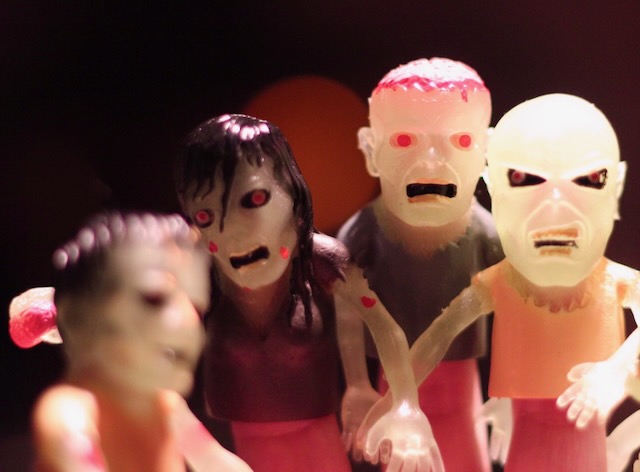
I already had my suspicions that the author of this book was not a living human. In my work as an editor, I have learned to detect the telltale signs of manuscripts written by zombies:
- In terms of sentence structure, grammar, spelling etc., their text is flawless from start to finish (in other words, unlike any human I have ever met);
- They appear unusually well read and very smart;
- They provide no personal anecdotes;
- They have a tendency to repeat themselves;
- Sometimes they are startlingly, inexplicably wrong.

 Plastic Brain