Do psychedelics qualify as a new class of antidepressant?


MagicMushrooms
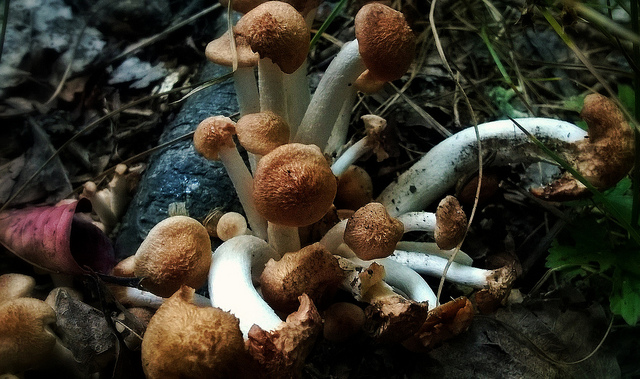
Psilocybin cubensis (magic mushrooms) growing in Maritime Forest on Long Island, NY. A pilot study found their active ingredient psilocybin was remarkably effective at lifting people out of treatment-resistant depression. Photographer: A. Hasan/Flickr

Clinical depression causes misery for hundreds of millions of people worldwide. Around one in five patients fails to respond to any treatment and even among those who do recover relapse rates are high and get progressively worse with each successive episode. The most widely used class of antidepressants, the selective serotonin reuptake inhibitors (SSRIs), can lift some people out of severe depression and help them stay well, but they don’t work for everyone and among the many side-effects are anxiety, weight gain and sexual dysfunction.

Since the SSRIs became available in the 1980s no new class of drugs has emerged, so the news that there may already be a more effective type of antidepressant in existence that is safe and well tolerated is tantalising. The catch is that to possess or supply these chemicals runs the risk of an unlimited fine or prison sentence 

This blogpost was published on the Guardian’s website, Tuesday 17 May 2016. Read on… 

Continue reading “Do psychedelics qualify as a new class of antidepressant?”

Ayahuasca boosts mindfulness

ayahuascaLargeMeditating can be hard, lonely work, but if recent research is to be believed there may be a quick-and-dirty shortcut to enlightenment: psychedelic drugs. According to an exploratory study, drinking the hallucinogenic brew ayahuasca can bring about improvements in mindfulness that would take years of dedicated meditation to achieve. The research found that ayahuasca raised mindfulness abilities to levels equal to or even greater than those of people who have been practising meditation for around seven years.

Continue reading “Ayahuasca boosts mindfulness”

Is this the brain’s mindfulness switch?

Thalamus small.gif

Journalists adore research that allows them to write stories along the lines of “scientists have tracked down the brain’s love HQ” or “researchers have located the brain’s god spot”. It is very satisfying to imagine that we can divide the brain into neat components with distinct functions like the parts of a car engine. We dream that one day, neuroscientists will be able to lift the bonnet (or the hood if it’s an American brain), point and say “here’s the valve that causes schizophrenia – we can readjust that with this chemical spanner. Here’s the tank that causes OCD when it overflows – we can drain that by turning this tap here. Over there are the spark plugs that we clean up to cure depression …”

Unfortunately the brain is a lot messier and more wonderful than your average motor engine, which is why we’re still standing over it scratching our heads trying to figure out how on earth it all works. It’s a tangle of connections, with myriad networks of components involved in creating thoughts, consciousness, sensations and emotions.

So it is with a mixture of excitement and wariness that I approach a study by researchers at Beijing Normal University in China that seems to point to a particular part of the brain that switches mindfulness on and off. It’s called the thalamus (shown in red on the animated gif), a pair of bulbous structures that sit at the top of the brainstem (yellow) on the midline of the brain. The thalamus plays a pivotal role as the brain’s switchboard, relaying information from all the senses apart from smell to the cerebral cortex, which is the thinking, conscious part of the brain. Continue reading “Is this the brain’s mindfulness switch?”

Meditation or medication for depression? A reality check

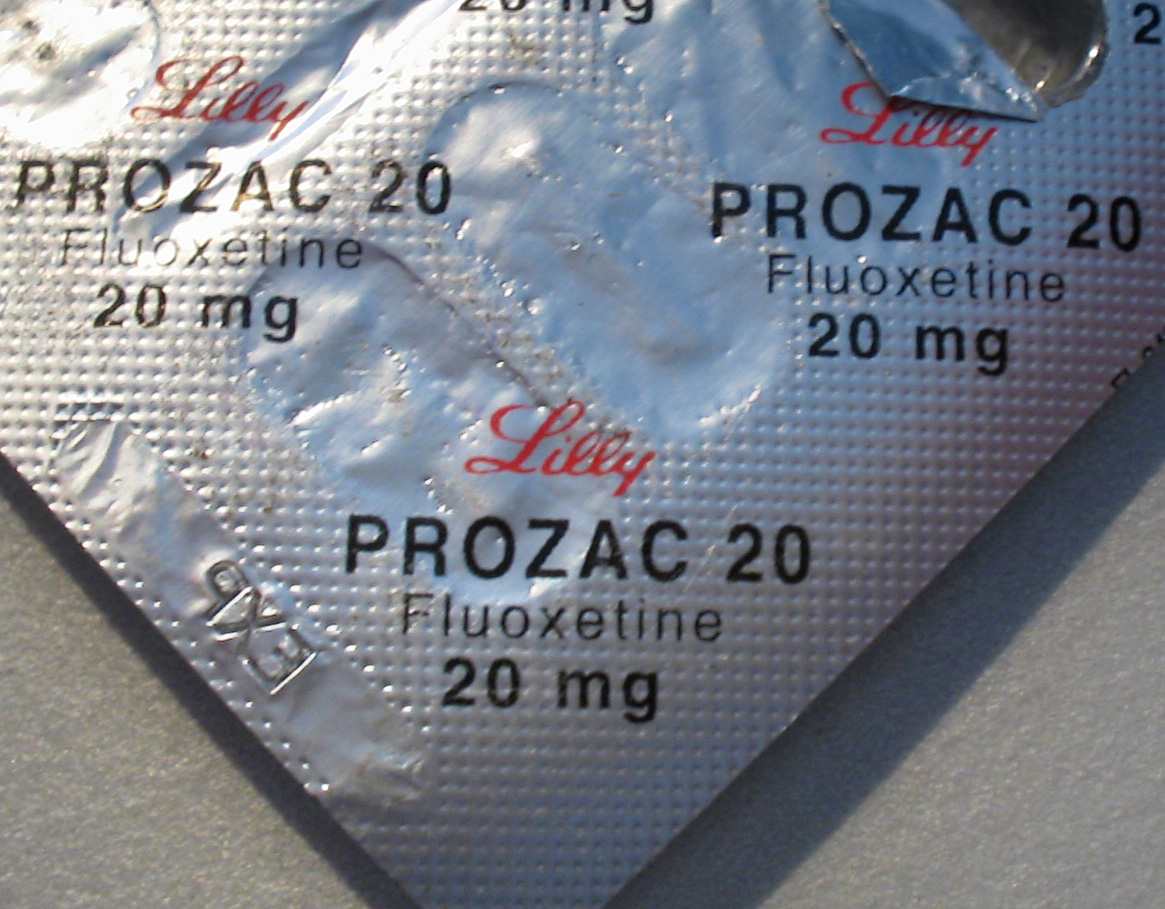
Prozac (fluoxetine) antidepressant pills
Research has suggested meditation is as effective as taking an antidepressant for mild depression

There was good news last week about the effectiveness of mindfulness meditation for easing anxiety, depression and pain. Mail Online reported that a study had found “meditation ‘works just as well as anti-depressants’: half an hour a day offers as much relief as tablets”, while The Boston Globe said those who took mindfulness classes experienced improvement in mood after eight weeks “on par with the effect seen with prescription medications”.

This was all perfectly true. A review published in JAMA Internal Medicine had looked at all the best studies to date and concluded that there was “moderate evidence” of improved anxiety, depression and pain among patients. The effect on mild depression was indeed equal to that achieved with anti-depressants.

Like me, though, you may be a bit underwhelmed by that phrase “moderate evidence”. It’s hardly a ringing endorsement, but better than “low evidence” – which was what the reviewers concluded about the efficacy of meditation for improving stress/distress and mental health-related quality of life. Continue reading “Meditation or medication for depression? A reality check”

Meditation for pain relief

Candle and Buddha
Pain is relieved by suppressing the “mental narratives” and “self-related processes” that usually exacerbate it

Pain is a fact of life: it can be dulled with drugs, but sometimes it’s just too intense or too persistent. Then we have to learn to live with it.

Buddhist monks are adept at doing this when they sit immobile in meditation, remaining straight-backed in the lotus position for hours on end. They are thought to achieve this by “uncoupling” the sensation of pain from their emotional reaction to it. This is more than just a parlour trick. Monks protesting the Chinese occupation of Tibet have shown they are capable of sitting unflinching as they burn to death. Continue reading “Meditation for pain relief”

Uncanny synchronicity in the brain during near death experiences and meditation

Stone Buddha head enveloped by roots
The Buddha is said to have entered a state of deep meditation as he died

People who have had a near-death experience commonly report a sense of wellbeing and peace, detachment from the world, the feeling of being outside their own body, and seeing a bright light. People who meditate deeply often report very similar sensations. Research reported yesterday in the journal PNAS suggests what may link the two experiences. Continue reading “Uncanny synchronicity in the brain during near death experiences and meditation”

Mindfulness monthly: bipolar disorder, time perception, older people, and eating disorders

A Buddhist monks blesses tourists on a beach in ThailandEvery month I’m going to round up the latest research about the potential applications of mindfulness. I’ll pick out only four or five nuggets (writing in detail about one, and writing a very brief summary of the others) but link to the awesome Mindfulness Research Monthly newsletter, which provides a much more comprehensive review of the field than I could ever do. Continue reading “Mindfulness monthly: bipolar disorder, time perception, older people, and eating disorders”

Channel 4’s Child Genius: why the losers are the real winners

Winner of Channel 4 Child Genius 2013 Shrinidi PrakashCongratulations to Shrinidi Prakash, who won the final of the Child Genius 2013 competition run by Mensa and broadcast on Channel 4 last night. She is a worthy winner, excelling at mental arithmetic, reasoning, spelling, memory tasks and (last night) debating. Even more impressively, she is the daughter of Indian immigrant parents whose first language is not English. All the other competitors had English parents. Shrinidi was already an under-12 international scrabble champ. Her extraordinary command of English must surely be down to her love of books (which she enjoys sniffing as well as reading!). Continue reading “Channel 4’s Child Genius: why the losers are the real winners”

Introducing Plastic Brain

walnuts

His Holiness the Dalai Lama keeps a plastic brain with detachable labelled components on the desk in his office in Dharamsala, India. It was a gift from his friend the late Robert Livingstone, a neuroscientist at the University of California, San Diego, whom he credits with opening his eyes to the findings of modern biology. Livingstone founded the world’s first department of neuroscience at UCSD in 1965 and dedicated his career to linking the anatomy of the brain to the workings of the mind.

That, in a nutshell, is why I’ve called my new blog Plastic Brain. For me, the model brain sitting on the Dalai Lama’s desk symbolises the way ancient contemplative practices and science have come together over the past three decades as the gulf between the intangible mind and the inscrutable brain has narrowed. These are exciting times for neuroscience and psychology. Continue reading “Introducing Plastic Brain”