Tell everyone you meet: All that arises, ceases

The remains of a rhubarb crumble
Everything is subject to crumbling. Photo: Anne-Renee Mauurin

Imagine if whenever you greeted someone for the first time – a supermarket cashier, the postman, a new colleague, a neighbour, a date, anybody – rather than uttering the usual “How are you?” you instead transmitted some little nugget of wisdom that might be of more use to them and might provoke a more interesting response than the usual “Fine thanks.” Continue reading “Tell everyone you meet: All that arises, ceases”

Dalai Lama enlightens and enraptures contemplative scientists in Boston

The Dalai Lama at the International Symposium for Contemplative Studies
The Dalai Lama takes part in a dialogue with scientists at the International Symposium for Contemplative Studies. From left to right: Amishi Jha, Richard Davidson, His Holiness, Thupten Jinpa and Arthur Zajonc. Photograph: Jurek Schreiner

When the Dalai Lama began a dialogue with cognitive scientists in 1987 to explore how the insights gained by Buddhist contemplatives could be used to inform research and find new ways to promote human wellbeing, he could not have imagined that businesses and even the US military would one day want to harness some of those insights. Continue reading “Dalai Lama enlightens and enraptures contemplative scientists in Boston”

Is this the brain’s mindfulness switch?

Thalamus small.gif

Journalists adore research that allows them to write stories along the lines of “scientists have tracked down the brain’s love HQ” or “researchers have located the brain’s god spot”. It is very satisfying to imagine that we can divide the brain into neat components with distinct functions like the parts of a car engine. We dream that one day, neuroscientists will be able to lift the bonnet (or the hood if it’s an American brain), point and say “here’s the valve that causes schizophrenia – we can readjust that with this chemical spanner. Here’s the tank that causes OCD when it overflows – we can drain that by turning this tap here. Over there are the spark plugs that we clean up to cure depression …”

Unfortunately the brain is a lot messier and more wonderful than your average motor engine, which is why we’re still standing over it scratching our heads trying to figure out how on earth it all works. It’s a tangle of connections, with myriad networks of components involved in creating thoughts, consciousness, sensations and emotions.

So it is with a mixture of excitement and wariness that I approach a study by researchers at Beijing Normal University in China that seems to point to a particular part of the brain that switches mindfulness on and off. It’s called the thalamus (shown in red on the animated gif), a pair of bulbous structures that sit at the top of the brainstem (yellow) on the midline of the brain. The thalamus plays a pivotal role as the brain’s switchboard, relaying information from all the senses apart from smell to the cerebral cortex, which is the thinking, conscious part of the brain. Continue reading “Is this the brain’s mindfulness switch?”

Uncanny synchronicity in the brain during near death experiences and meditation

Stone Buddha head enveloped by roots
The Buddha is said to have entered a state of deep meditation as he died

People who have had a near-death experience commonly report a sense of wellbeing and peace, detachment from the world, the feeling of being outside their own body, and seeing a bright light. People who meditate deeply often report very similar sensations. Research reported yesterday in the journal PNAS suggests what may link the two experiences. Continue reading “Uncanny synchronicity in the brain during near death experiences and meditation”

The Universe in a Single Atom by His Holiness the Dalai Lama – review

Wimbledon Buddhist temple
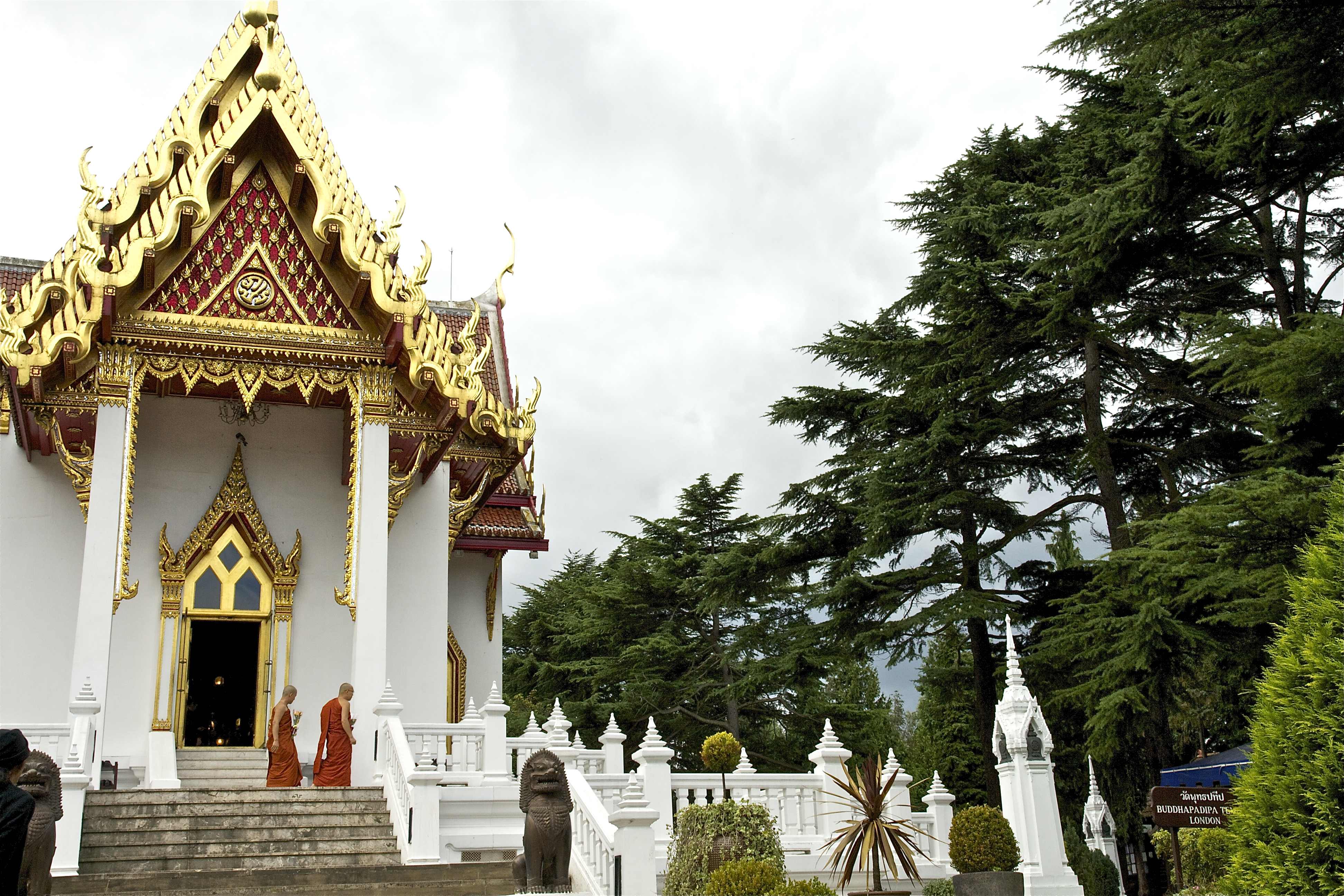
The Buddhapadipa temple in Wimbledon, UK, which offers meditation classes for beginners

The Dalai Lama wants every cognitive scientist to learn how to meditate. He believes this will give them insights into the mind and consciousness that plastering electrodes on scalps or scanning brains with powerful magnetic fields never could.

Whereas a scientist looks at the mind from the outside, he says, an experienced meditator examines it from within. Neither sees the whole picture and so we could learn a great deal by combining the two perspectives. Continue reading “The Universe in a Single Atom by His Holiness the Dalai Lama – review”

Mindfulness monthly: bipolar disorder, time perception, older people, and eating disorders

A Buddhist monks blesses tourists on a beach in ThailandEvery month I’m going to round up the latest research about the potential applications of mindfulness. I’ll pick out only four or five nuggets (writing in detail about one, and writing a very brief summary of the others) but link to the awesome Mindfulness Research Monthly newsletter, which provides a much more comprehensive review of the field than I could ever do. Continue reading “Mindfulness monthly: bipolar disorder, time perception, older people, and eating disorders”