Siddhartha’s Brain – enlightenment in paperback


SiddharthasBrainUK

My new book Siddhartha’s Brain was published as a paperback in the UK on Thursday. The book is all about what meditation and mindfulness do to your brain, what it might mean to be “enlightened”, and why mindfulness-based therapies have been showing such promise as treatments for anxiety, depression and addiction.

I also explore the mystery of why human beings are so prone to mental illness. A potential answer may be found on the African savannah millions of years ago during the slow evolution of our ancestors into the most highly sociable apes on the planet.

Ed Halliwell – a former editor at FHM magazine and now a renowned mindfulness instructor – has suffered from debilitating bouts of anxiety and depression for much of his adult life. Published in the UK on the same day as Siddhartha’s Brain, Into the Heart of Mindfulness provides moving, first-hand testimony of how mindfulness can help people with mental illness get their lives back on track – and provides a perfect complement to my own book.

The story of the spiritual journey of Siddhartha Gautama, from spoilt prince to perfectly enlightened Buddha, is my backdrop – though it goes without saying you don’t have to be a Buddhist to practise mindfulness and improve your own wellbeing. All you need is a standard-issue human brain and a little dedication.

If you’re interested, read the extract published in last weekend’s Observer Magazine, find out more about my motivation for writing the book on a recent blogpost to mark its publication in the US, or listen to a short extract from the audiobook, read by the wonderful Steven Crossley.

If you’ve already read Siddhartha’s Brain or are reading it I’d love to know what you think. I can usually be found hanging out on Twitter @JamesAKingsland.



Do psychedelics qualify as a new class of antidepressant?


MagicMushrooms
Psilocybin cubensis (magic mushrooms) growing in Maritime Forest on Long Island, NY. A pilot study found their active ingredient psilocybin was remarkably effective at lifting people out of treatment-resistant depression. Photographer: A. Hasan/Flickr

Clinical depression causes misery for hundreds of millions of people worldwide. Around one in five patients fails to respond to any treatment and even among those who do recover relapse rates are high and get progressively worse with each successive episode. The most widely used class of antidepressants, the selective serotonin reuptake inhibitors (SSRIs), can lift some people out of severe depression and help them stay well, but they don’t work for everyone and among the many side-effects are anxiety, weight gain and sexual dysfunction.

Since the SSRIs became available in the 1980s no new class of drugs has emerged, so the news that there may already be a more effective type of antidepressant in existence that is safe and well tolerated is tantalising. The catch is that to possess or supply these chemicals runs the risk of an unlimited fine or prison sentence 

This blogpost was published on the Guardian’s website, Tuesday 17 May 2016. Read on… 

Continue reading “Do psychedelics qualify as a new class of antidepressant?”

Ayahuasca boosts mindfulness

ayahuascaLargeMeditating can be hard, lonely work, but if recent research is to be believed there may be a quick-and-dirty shortcut to enlightenment: psychedelic drugs. According to an exploratory study, drinking the hallucinogenic brew ayahuasca can bring about improvements in mindfulness that would take years of dedicated meditation to achieve. The research found that ayahuasca raised mindfulness abilities to levels equal to or even greater than those of people who have been practising meditation for around seven years.

Continue reading “Ayahuasca boosts mindfulness”

Go gentle into that good night

Weeds grow on a concrete pathway in a cemetery in Galveston, Texas

Do not go gentle into that good night,
Old age should burn and rave at close of day;
Rage, rage against the dying of the light.
                                                       Dylan Thomas

“How do individuals emotionally cope with the imminent real-world salience of mortality?” wonder psychologists in a recent paper. Or in everyday language, how do people manage when they come face to face with death? The psychologists’ research suggests that, even under the most challenging circumstances, most people manage surprisingly well.

Sarah Hirschmüller and Boris Egloff from Johannes Gutenberg University Mainz in Germany analysed the last words of people you might expect to bemoan bitterly their fate and “rage, rage against the dying of the light”: prisoners on death row just seconds away from execution. But in fact, more than 80% used a greater number of positive emotional words in their final spoken statements than negative emotional words. Continue reading “Go gentle into that good night”

Meditation and psychosis

Meditation

There’s something weird going on in the field of meditation and mindfulness research. On the one hand there are voices warning that meditation can cause psychosis – leading people to lose touch with reality and experience symptoms such as hallucinations, delusions and disturbing thoughts – on the other there are equally persuasive voices claiming that it should be used to treat psychosis. Continue reading “Meditation and psychosis”

Is this the brain’s mindfulness switch?

Thalamus small.gif

Journalists adore research that allows them to write stories along the lines of “scientists have tracked down the brain’s love HQ” or “researchers have located the brain’s god spot”. It is very satisfying to imagine that we can divide the brain into neat components with distinct functions like the parts of a car engine. We dream that one day, neuroscientists will be able to lift the bonnet (or the hood if it’s an American brain), point and say “here’s the valve that causes schizophrenia – we can readjust that with this chemical spanner. Here’s the tank that causes OCD when it overflows – we can drain that by turning this tap here. Over there are the spark plugs that we clean up to cure depression …”

Unfortunately the brain is a lot messier and more wonderful than your average motor engine, which is why we’re still standing over it scratching our heads trying to figure out how on earth it all works. It’s a tangle of connections, with myriad networks of components involved in creating thoughts, consciousness, sensations and emotions.

So it is with a mixture of excitement and wariness that I approach a study by researchers at Beijing Normal University in China that seems to point to a particular part of the brain that switches mindfulness on and off. It’s called the thalamus (shown in red on the animated gif), a pair of bulbous structures that sit at the top of the brainstem (yellow) on the midline of the brain. The thalamus plays a pivotal role as the brain’s switchboard, relaying information from all the senses apart from smell to the cerebral cortex, which is the thinking, conscious part of the brain. Continue reading “Is this the brain’s mindfulness switch?”

Growing old stressfully: chronic stress and prematurely aged cells

Human chromosomes showing telomeres
Human chromosomes (grey) capped by telomeres (white). Photograph: public domain

Forty years ago, the Whitehall Study of men working for Britain’s Civil Service famously revealed that those at the bottom of the pecking order were much more likely to die prematurely than those at the top – regardless of other risk factors such as smoking. They had higher mortality rates from all causes, but especially heart disease.

So the lowly paid doorman, whether or not he was a heavy smoker, was more likely to drop dead than the clerk sitting at his desk all day earning more money. As ever, life was deeply unfair. But what was the biological explanation for this health inequality? One theory was that the stress and lack of control over their working lives experienced by men in lowlier jobs were putting their health at risk, though how that worked physiologically was anyone’s guess. Continue reading “Growing old stressfully: chronic stress and prematurely aged cells”

Meditation or medication for depression? A reality check

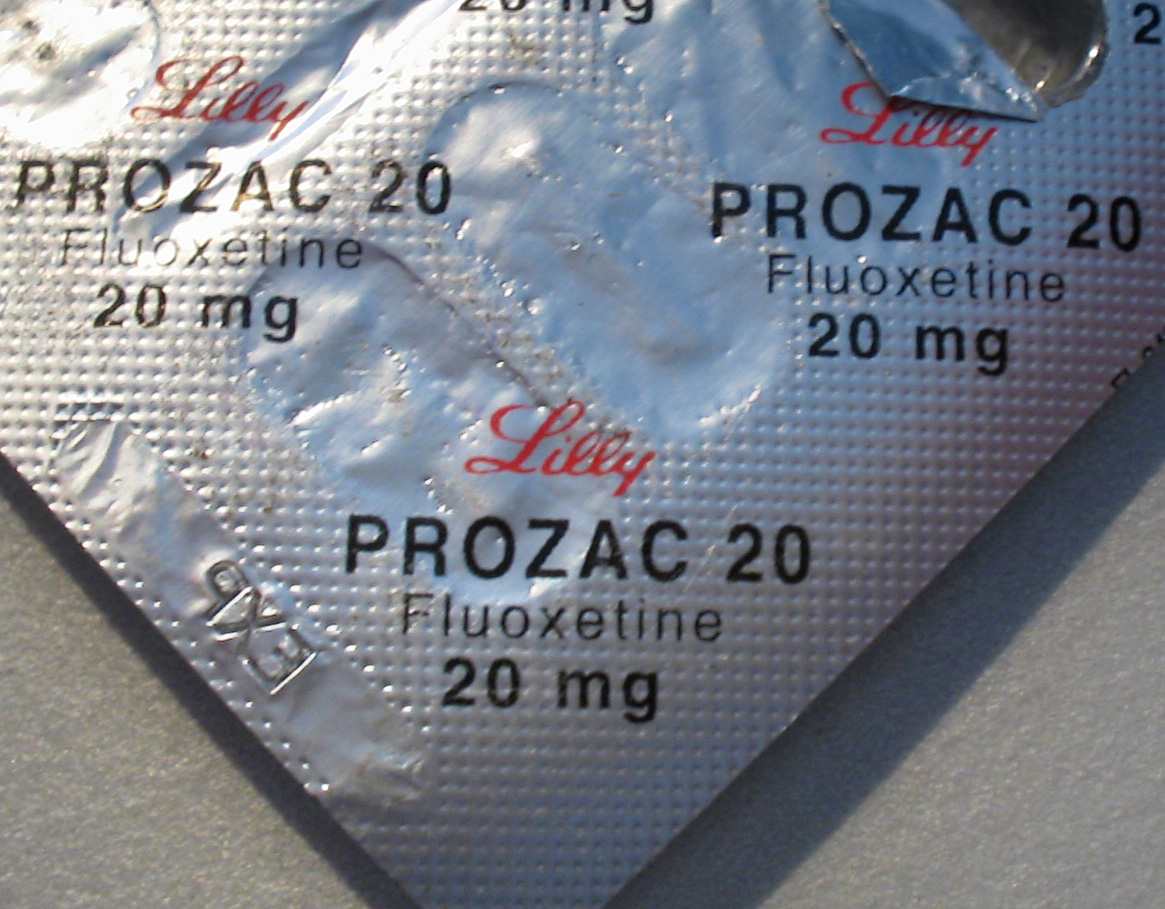
Prozac (fluoxetine) antidepressant pills
Research has suggested meditation is as effective as taking an antidepressant for mild depression

There was good news last week about the effectiveness of mindfulness meditation for easing anxiety, depression and pain. Mail Online reported that a study had found “meditation ‘works just as well as anti-depressants’: half an hour a day offers as much relief as tablets”, while The Boston Globe said those who took mindfulness classes experienced improvement in mood after eight weeks “on par with the effect seen with prescription medications”.

This was all perfectly true. A review published in JAMA Internal Medicine had looked at all the best studies to date and concluded that there was “moderate evidence” of improved anxiety, depression and pain among patients. The effect on mild depression was indeed equal to that achieved with anti-depressants.

Like me, though, you may be a bit underwhelmed by that phrase “moderate evidence”. It’s hardly a ringing endorsement, but better than “low evidence” – which was what the reviewers concluded about the efficacy of meditation for improving stress/distress and mental health-related quality of life. Continue reading “Meditation or medication for depression? A reality check”

Meditation for pain relief

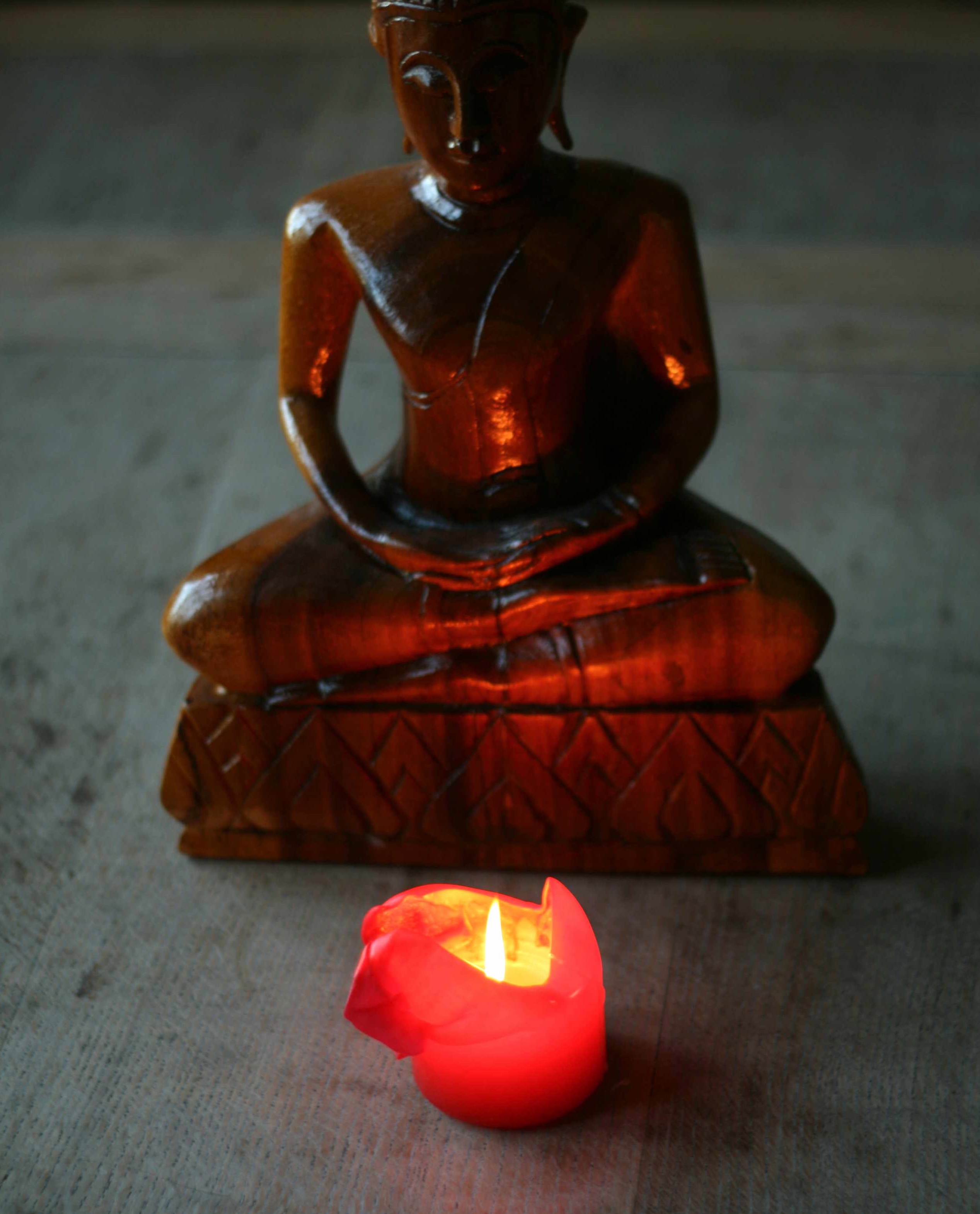
Candle and Buddha
Pain is relieved by suppressing the “mental narratives” and “self-related processes” that usually exacerbate it

Pain is a fact of life: it can be dulled with drugs, but sometimes it’s just too intense or too persistent. Then we have to learn to live with it.

Buddhist monks are adept at doing this when they sit immobile in meditation, remaining straight-backed in the lotus position for hours on end. They are thought to achieve this by “uncoupling” the sensation of pain from their emotional reaction to it. This is more than just a parlour trick. Monks protesting the Chinese occupation of Tibet have shown they are capable of sitting unflinching as they burn to death. Continue reading “Meditation for pain relief”

Cigarettes and cupcakes: mindfulness meditation reduces craving

Delicious cupcakes
Resistance is useless: it just makes the craving worse

Life is so unfair. Trying to give up something you’re addicted to just makes you crave that thing even more, whether it’s cigarettes, alcohol or sugar. You’re caught in a Catch-22: you want to quit, but the more you try, the harder it gets to resist temptation. Perhaps the key is not to try so damn hard, but instead improve your brain’s capacity for self-control.

It might just work… Continue reading “Cigarettes and cupcakes: mindfulness meditation reduces craving”